
Resources
Beyond Pass/Fail: Why USP <51> Demands a More Scientific Approach to Antimicrobial Efficacy Testing
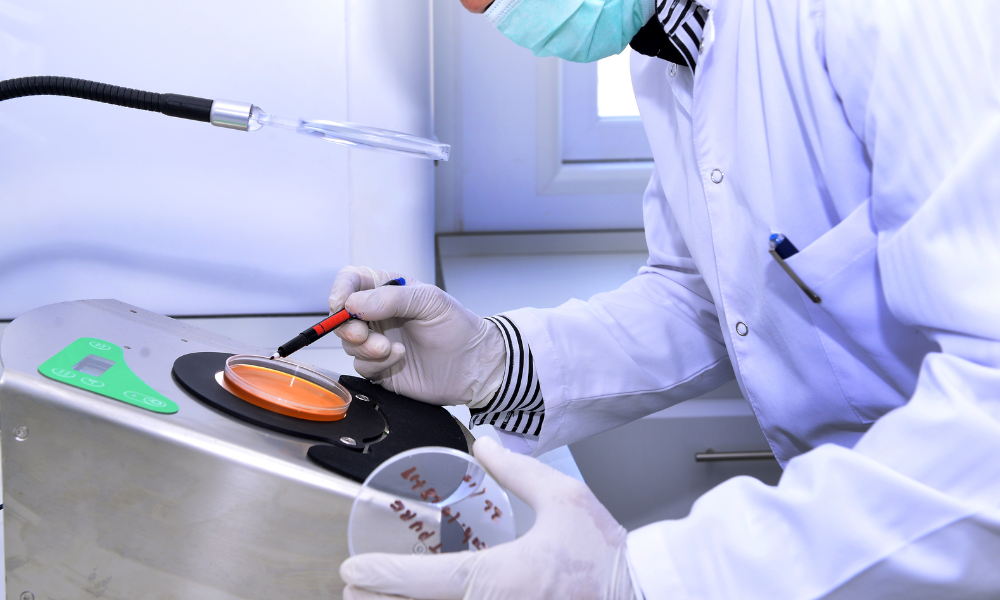
Pharmaceutical, cosmetic, and personal care products containing aqueous components are susceptible to microbial contamination—especially during manufacturing and consumer use. To ensure product safety and stability over time, the United States Pharmacopeia (USP) <51> Antimicrobial Effectiveness Testing (AET) remains one of the most widely accepted standardized methods for evaluating preservative performance.
However, many testing providers offer only a basic interpretation: pass or fail. This binary perspective can overlook key insights, delay product development, or lead to unnecessary reformulations. At iFyber, we believe USP <51> should be more than a checkbox, it should be a diagnostic tool that informs product strategy and development.
Why USP <51> Still Matters in Modern Formulation Science
Despite being established decades ago, USP <51> remains a critical quality assurance method for any product formulated with preservatives. The FDA, EMA, and other regulatory agencies still expect adherence to the assay’s parameters, especially for products destined for global markets.
The test challenges the formulation with a defined panel of five microorganisms – including E. coli (ATCC 8739), P. aeruginosa (ATCC 9027), and Candida albicans (ATCC 10231) – representing common routes of contamination. Depending on product category, acceptance criteria can require a ≥3-log reduction within 14 days, with no increase at 28 days.
Recent publications underscore the ongoing importance of this assay. For instance, a 2021 study in the International Journal of Cosmetic Science highlighted how improperly neutralized preservatives can yield misleading results, delaying time to market or risking unsafe product release. This supports the necessity of neutralization validation as a precursor to testing.
Common Pitfalls in USP <51> Execution
Scientific precision is paramount when performing AET. iFyber frequently encounters sponsors whose prior assays failed due to:
- Inadequate neutralization protocols – Residual antimicrobial activity can suppress growth artificially, yielding false negatives.
- Poor media verification – Failure to conduct sterility and growth promotion testing can compromise results.
- Overlooked product-specific interactions – Some excipients interact with test organisms, skewing log reduction counts.
Each of these issues can be mitigated with a pre-assay suitability study, a service iFyber routinely includes to ensure accurate data generation.
Does USP <51> Answer Every Antimicrobial Question?
USP <51> antimicrobial effectiveness testing is an important tool for evaluating the preservative effectiveness of pharmaceutical, cosmetic, and personal care products. By measuring how well a preservative system controls microbial growth over time, the test helps demonstrate that a formulation can resist microbial contamination throughout its intended shelf life.
However, USP <51> antimicrobial effectiveness testing is designed to answer one specific question: Is the preservative system effective under the conditions outlined in the standard? Depending on your product, development stage, or unexpected test results, that answer may not provide all the information needed to move development forward.
For example, you may need to better understand:
- Why a formulation failed antimicrobial testing.
- Whether an antimicrobial inhibits microbial growth or actively kills microorganisms.
- How a product performs under intended-use conditions.
- Whether additional studies are needed to support formulation optimization or product development.
In these situations, complementary antimicrobial testing strategies can help answer questions that extend beyond the scope of USP <51>.
Building a More Complete Antimicrobial Testing Strategy
As products become more complex, antimicrobial testing often extends beyond a single standardized method. Many development programs begin with USP <51> antimicrobial effectiveness testing and then incorporate additional assays to better understand antimicrobial performance. For example:
MIC Testing
MIC studies determine the lowest concentration of an antimicrobial required to inhibit visible microbial growth. These studies are commonly used during formulation development and screening to compare antimicrobial potency across candidate materials or formulations.
MBC Testing
MBC testing complements MIC by determining the lowest concentration required to kill microorganisms rather than simply inhibit their growth. Together, MIC and MBC provide a more complete understanding of antimicrobial activity.
Direct-Contact Assays
For products designed to actively interact with microorganisms, such as wound care materials, medical devices, or antimicrobial surfaces, direct-contact assays can evaluate antimicrobial performance under conditions that more closely reflect intended product use.
No single antimicrobial test answers every development question. Instead, selecting the appropriate combination of standardized methods and application-specific studies can provide a more comprehensive understanding of product performance and generate meaningful data throughout product development.
When Standardized Testing Is Only the Beginning
USP <51> antimicrobial effectiveness testing remains a cornerstone for evaluating preservative efficacy and demonstrating that a formulation can resist microbial contamination over time. For many products, it provides the data needed to support quality and regulatory expectations.
However, product development doesn’t always end with a passing, or failing, USP <51> result. Unexpected outcomes, formulation changes, or questions about antimicrobial performance may require additional investigation to fully understand what’s happening and determine the next steps.
That’s where complementary testing approaches, such as MIC, MBC, direct-contact assays, and other application-specific studies, can provide valuable scientific insight. By selecting testing strategies that align with the biological question being asked, development teams can generate more meaningful data, refine formulations, and make better-informed product decisions.
At iFyber, we work alongside product development teams to design antimicrobial testing strategies that go beyond a single standardized assay. Whether you need to troubleshoot unexpected USP <51> results, compare preservative performance, or evaluate antimicrobial activity using additional endpoints, our scientists help generate the data needed to support confident development decisions.
USP <51> antimicrobial effectiveness testing is an important starting point but when additional questions arise, the right combination of antimicrobial testing methods can provide the answers needed to move your product forward.