
LC MS/MS Analysis
High resolution mass spectrometry for discovery, quantification, chemical characterization, and complex biological analysis.
Liquid Chromatography–Mass Spectrometry (LC‑MS) enables researchers to identify, characterize, and quantify chemical and biological components within complex samples. iFyber’s LC‑MS services support discovery‑phase research, targeted quantification, extractables and leachables (E&L) studies, proteomics, metabolomics, and other analytical workflows that help teams understand what is present in a sample and why it matters for product performance, biological relevance, or regulatory readiness.
What sets iFyber apart is how LC‑MS integrates with our broader R&D capabilities - including microbiology, molecular and cellular biology, polymer and biomaterial characterization, bioanalytical chemistry, and in vitro/ex vivo models - allowing us to design studies that not only identify what’s present, but also explain its biological relevance, material performance, or regulatory implications.
LC-MS Analysis Services
iFyber provides LC-MS capabilities for a range of analytical and research needs, from exploratory discovery and targeted quantitative analysis to custom method development and additional analytical capacity. These workflows can be applied across biological samples, biomaterials, and product systems based on the analytical questions and development goals.
Our LC-MS services include untargeted discovery, targeted quantitative analysis, and overflow analytical capacity, supported by high-resolution instrumentation and integrated expertise across biological and material systems. Explore how these capabilities are applied across proteomics, extractables and leachables, metabolomics, and lipidomics.
Researchers commonly use LC‑MS analysis to:
- Identify unknown compounds
- Characterize unexpected analytical results
- Quantify validated biomarkers or analytes
- Support method development
- Investigate contamination or anomalies
- Generate data for regulatory submissions
LC MS Instrumentation Services
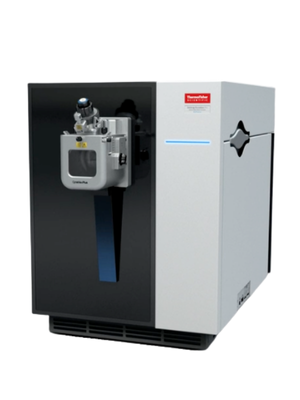
iFyber’s LC‑MS services are powered by the Orbitrap Excedion Pro Hybrid Mass Spectrometer, a state‑of‑the‑art system that delivers enhanced sensitivity, high resolution, and dynamic flexibility required for today’s complex analytical challenges. This platform supports biopharma, metabolomics, proteomics, and structural biology applications requiring precise, reproducible, high‑confidence data.
iFyber's Capabilities in LC-MS Instrumentation
iFyber uses high‑resolution mass analysis, electron‑based fragmentation, and gas‑phase fractionation to capture molecular information with exceptional clarity. Our instrumentation supports deep biological and material characterization across nano‑, capillary‑, and micro‑flow LC‑MS workflows.
Capabilities Include:
- Ultra‑high‑field Orbitrap mass analysis
- Electron‑based fragmentation (ETD/EThcD)
- Gas‑phase fractionation (FAIMS Pro Duo)
- High‑duty cycle sensitivity
- Robust nano‑, capillary‑, and micro‑flow LC integration
The mass spectrometry platform features an ultra‑high‑field Orbitrap analyzer capable of up to 70 Hz MS² scans, supported by a quadrupole and ion‑routing multipole for versatile fragmentation control. EASY‑IC provides accurate mass calibration, while ETD and EThcD enable detailed electron‑based fragmentation. The bent‑trap architecture enhances sensitivity through high‑duty cycles, and the FAIMS Pro Duo interface delivers online gas‑phase fractionation to reduce noise and improve system robustness.
The OptaMax™ Plus ion source and EasySpray™ technology provide high‑sensitivity ionization optimized for nano‑flow LC‑MS workflows. Seamless integration with Thermo Scientific™ PepMap™ Neo columns enables tool‑free setup, superior separation performance, and consistent column‑to‑column reproducibility, improving overall workflow flexibility.
The ProFlow™ XR 1500 bar pump delivers exceptional retention‑time precision and stability across the full low‑flow range, reducing variability in complex separations. A low‑flow split‑loop autosampler minimizes sample dispersion and carryover, optimizing sample usage and enhancing sensitivity for demanding analytical applications.
Proteomics Services
Proteomics enables large‑scale analysis of proteins within biological systems, supporting discovery research, mechanism‑of‑action studies, biomarker development, and translational applications. LC‑MS provides the sensitivity and resolution needed to detect low‑abundance proteins and characterize complex biological samples.
iFyber's Capabilities in Proteomics
iFyber provides advanced proteomic analysis for accurate identification and quantification of proteins across complex biological samples. Our workflows support deep proteome coverage, PTM analysis, multiplexed quantification, and immunopeptidomics.
Capabilities Include:
- Deep proteome coverage
- Post‑translational modification (PTM) analysis
- Multiplexed protein quantification
- Immunopeptidomics development
- Biomarker discovery support
- Mechanism‑of‑action investigations
Supports discovery proteomics, unknown compound identification, unexpected analytical result investigation, and systems‑level biological analysis.
Supports quantification of validated biomarkers, known analytes, and structured workflows supporting method development, product evaluation, and E&L studies.
Extractables & Leachables (E&L) Services
LC‑MS enables precise identification and quantification of extractable and leachable compounds in medical devices, packaging, and container systems. These studies help teams investigate unexpected anomalies, contamination events, and material incompatibilities.
iFyber's Capabilities in E&L Testing
iFyber supports early‑stage extractables profiling and downstream regulatory preparation using high‑resolution LC‑MS workflows. Our analytical approach helps teams identify, quantify, and evaluate potential extractables before entering full GLP studies.
Capabilities Include:
- Early‑stage extractables profiling
- LC‑MS compound identification and quantitation
- Multi‑solvent and multi‑condition extraction strategy support
- Orthogonal analytical workflows
- Structural elucidation
- ISO 10993‑18 chemical characterization support
Identification and quantification of potential leachables across polymeric, device, and combination product matrices.
Structural elucidation using complementary analytical techniques to confirm compound identity and support regulatory readiness.
Development of multi‑solvent and multi‑condition extraction strategies to anticipate analytical challenges and refine study design.
Metabolomics Services
Metabolomics analyzes small molecules that reflect biological activity within cells, tissues, and fluids. LC‑MS enables comprehensive profiling to support biomarker discovery, diagnostic development, inflammation research, and therapeutic evaluation.
iFyber's Capabilities in Metabolomics
iFyber applies high-resolution LC-MS to metabolite profiling and targeted quantification, supporting exploratory biomarker research, mechanistic studies, and method development.
Capabilities Include:
- High‑resolution metabolic profiling
- Quantification of small molecules
- Biomarker discovery support
- Longitudinal study analysis
- Rapid exploratory workflows
Comprehensive LC‑MS analysis of metabolites associated with inflammation, chronic disease, infection, and therapeutic response.
Targeted quantification of validated metabolites to support diagnostic development, therapeutic evaluation, and mechanistic studies.
Lipidomics Services
Lipidomics enables comprehensive analysis of lipid molecules involved in cellular signaling, membrane structure, metabolism, inflammation, and disease processes. High‑resolution LC‑MS provides the selectivity, mass accuracy, and sensitivity needed to profile diverse lipid species, distinguish closely related lipid species, and quantify biologically relevant lipid pathways across complex samples.
Our lipidomics workflows support exploratory discovery, targeted quantification, comparative profiling, and mechanistic studies that help teams understand how lipid composition changes across biological conditions, therapeutic interventions, or material interactions.
iFyber's Capabilities in Lipidomics
iFyber applies high‑resolution Orbitrap LC‑MS to characterize lipid classes, molecular species, and biologically relevant lipid pathways with high mass accuracy and detailed MS/MS characterization. Our workflows integrate optimized chromatography, polarity‑switching, and advanced MS/MS fragmentation to resolve isobaric species, differentiate closely related lipid species, characterize structural variants, and support targeted quantification of selected lipids from complex biological matrices.
Capabilities Include:
- Untargeted lipid profiling
- Targeted lipid quantification
- High-resolution lipid identification
- Lipid class and molecular species characterization
- Bile acid analysis
- Comparative lipid profiling across biological conditions
- Custom LC-MS method development
High‑resolution LC‑MS analysis of lipid species across complex biological samples to characterize lipid composition, identify differences between experimental groups, and support investigation of metabolic and biological pathways. Orbitrap mass accuracy enables confident resolution of isobaric species, while optimized chromatographic strategies improve separation of lipid classes and structural variants. These workflows support exploratory discovery, mechanism‑of‑action studies, inflammation research, and comparative biological analyses.
Quantitative analysis of selected lipids and lipid classes to support mechanistic studies, biomarker research, pathway analysis, and validation of specific lipid changes identified during exploratory studies. Targeted methods can be developed for selected phospholipids, sphingolipids, glycerolipids, sterols, bile acids, and other biologically relevant lipid molecules.
LC MS Analysis Capabilities & Applications
iFyber’s LC‑MS services—including E&L testing, metabolomics, proteomics, lipidomics, and more—are designed around your specific research goals. We integrate method development, analysis, and interpretation to ensure the data you receive is directly relevant and actionable.
Applications include:
- Pharma & biotech
- Medical device development
- Academic research
- Exploratory discovery workflows
- Contamination or anomaly investigations
A Trusted, Global-Serving Contract Research Organization
Engage with iFyber’s Scientific Team
Connect with iFyber to explore how LCMS/MS services can support your research and development projects.