Resources
Mediators of Wound Healing: Cytokines, Growth Factors, and the Inflammatory Phase of Wound Healing
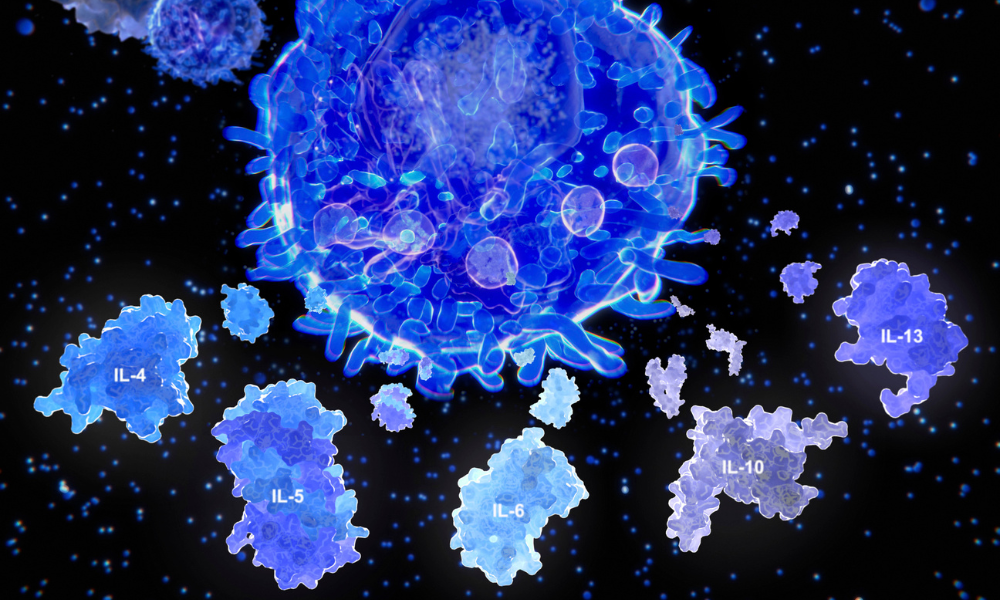
The human body has a highly coordinated capacity for tissue repair, driven by tightly regulated signaling networks involving cytokines and growth factors. These mediators orchestrate immune activation, tissue clearance, angiogenesis, and extracellular matrix remodeling across the full continuum of healing.
For researchers and developers in regenerative medicine, a deeper understanding of the inflammatory phase of wound healing and its transition into the proliferative phase of wound healing is essential for designing next-generation therapies that actively modulate the wound microenvironment rather than simply supporting closure.
“By targeting the factors that can lead to chronic wounds, such as co-morbidities like diabetes, blood pressure, smoking, and the presence of microbes, whether infectious or commensal, we can create complex medical products that work to reduce microbial load and the chance for biofilms and infections. These devices may impact the cytokine profile of the wound or surgical site and ultimately help patients by reducing their healing time,” said Greg Mouchka, President of iFyber.
The Phases of Wound Healing: From Inflammation to Proliferation
Wound healing is classically divided into overlapping phases: hemostasis, inflammation, proliferation, and remodeling. However, from a mechanistic standpoint, the transition between the inflammatory phase of wound healing and the proliferative phase of wound healing is increasingly recognized as a critical decision point that determines whether tissue repair progresses normally or becomes pathologic.
During hemostasis, clot formation and platelet activation initiate early signaling cascades that release pro-inflammatory mediators. This rapidly transitions into the inflammatory phase, where immune cells are recruited to the wound site and cytokine signaling becomes dominant.
The inflammatory phase of wound healing is characterized by the activation of innate immune pathways, including NF-κB signaling, which drives the production of additional cytokines and sustains immune cell recruitment. While essential for debridement and pathogen control, dysregulation of this phase can result in prolonged inflammation and impaired progression into the proliferative phase of wound healing.
The proliferative phase of wound healing is marked by fibroblast activation, angiogenesis, and epithelial regeneration. Growth factors become dominant regulators in this phase, guiding tissue reconstruction and extracellular matrix deposition. A failure to properly transition from inflammation to proliferation is a key feature of chronic, non-healing wounds. Recent studies implicate senescent cells and senescence-associated secretory phenotypes (SASP) in sustaining chronic inflammatory signaling within non-healing wounds.
Remodeling then follows, during which extracellular matrix architecture is reorganized and tissue tensile strength is restored over weeks to months.
Cytokines and Growth Factors in the Inflammatory Phase of Wound Healing
Cytokines are central regulators of the inflammatory phase of wound healing, coordinating immune cell recruitment and activation. However, their persistent elevation is strongly associated with chronic wound pathology.
TNF-α (Tumor Necrosis Factor-alpha)
TNF-α is a major pro-inflammatory cytokine involved in early immune activation. It enhances vascular permeability and leukocyte recruitment, but sustained expression can disrupt healing progression and contribute to fibrosis.
In chronic wounds, prolonged TNF-α signaling is often associated with a failure to transition into the proliferative phase of wound healing, reinforcing inflammatory persistence.
IL-6 (Interleukin-6)
IL-6 plays a dual role in both inflammatory activation and tissue repair signaling. During the inflammatory phase of wound healing, it supports immune cell recruitment, but its continued elevation may indicate unresolved inflammation and delayed progression into the proliferative phase of wound healing.
Clinically, IL-6 is being explored as a biomarker for predicting healing efficiency and post-surgical recovery outcomes.
IL-1β (Interleukin-1 Beta)
IL-1β is a key mediator of early immune activation and neutrophil recruitment. While essential in the inflammatory phase of wound healing, dysregulated IL-1β signaling is linked to excessive tissue damage and impaired transition into the proliferative phase of wound healing.
Growth Factors Driving the Proliferative Phase of Wound Healing
While cytokines dominate the inflammatory phase of wound healing, growth factors are critical regulators of the proliferative phase of wound healing, where tissue regeneration and vascularization occur.
TGF-β (Transforming Growth Factor-beta)
TGF-β regulates fibroblast activation and extracellular matrix production. Balanced signaling is essential for proper repair; however, excessive activity can lead to fibrosis and abnormal scar formation.
TGF-β plays a central role in orchestrating the shift from inflammation into the proliferative phase of wound healing by promoting matrix deposition and cellular differentiation.
EGF (Epidermal Growth Factor)
EGF stimulates keratinocyte migration and proliferation, making it essential for re-epithelialization during the proliferative phase of wound healing. It is widely studied in burn care and chronic wound therapies aimed at accelerating skin regeneration.
VEGF (Vascular Endothelial Growth Factor)
VEGF drives angiogenesis, a defining feature of the proliferative phase of wound healing. By promoting endothelial cell growth and new vessel formation, VEGF restores oxygen and nutrient delivery to regenerating tissue.
VEGF signaling is often impaired in chronic wounds, limiting progression beyond the inflammatory phase of wound healing.
Macrophage Polarization and Inflammatory Resolution
A key mechanistic regulator of the transition between the inflammatory phase of wound healing and the proliferative phase of wound healing is macrophage polarization.
M1 macrophages dominate early inflammation, producing pro-inflammatory cytokines such as TNF-α and IL-1β. In contrast, M2 macrophages support inflammatory resolution, tissue remodeling, and repair processes.
Impaired or delayed M1-to-M2 transition is strongly associated with chronic wound persistence and impaired healing progression.
Emerging research is also focused on specialized pro-resolving mediators (SPMs), which actively regulate inflammatory resolution rather than suppressing immune activity. These lipid mediators support macrophage reprogramming and restoration of tissue homeostasis.
The Wound Microenvironment: MMP/TIMP Imbalance and Therapeutic Challenges
The chronic wound microenvironment is often characterized by elevated protease activity and oxidative stress. A key imbalance between matrix metalloproteinases (MMPs) and their inhibitors (TIMPs) leads to degradation of extracellular matrix components and growth factors.
This proteolytic environment can directly inhibit progression into the proliferative phase of wound healing by degrading key signaling molecules required for tissue regeneration.
iFyber as a Translational Research Partner
iFyber supports medical device manufacturers and regenerative medicine developers by providing advanced in vitro modeling and analytical services to evaluate wound healing mechanisms.
“Organizations that are researching and developing engineered solutions to growth factor delivery need a partner that fully understands the cell and tissue culture environment and can perform the assays that can quantify the growth factors,” said Mouchka. “iFyber can assist in the formulation, delivery, and verification of results as part of the growth-factor-delivery development process. We can also evaluate a device’s ability to promote the formation of growth factors in living human-skin-equivalent models of healing.”
By leveraging cytokine profiling, biomarker analysis, and tissue-engineered wound models, iFyber helps researchers evaluate how novel therapies influence the inflammatory phase of wound healing and improve transition into the proliferative phase of wound healing.
Whether developing biomaterials, biologics, or advanced drug delivery systems, understanding how interventions modulate cytokines and growth factors remains central to improving clinical outcomes in wound repair and regenerative medicine.