
Human-Relevant Evidence for Monoclonal Antibodies
Predict how your antibody performs where it matters most - inside human tissue - before clinical risk becomes clinical reality.
iFyber helps antibody developers evaluate stability, activity, and specificity in real human tissue environments, enabling smarter decisions from discovery through early clinical development.
Through an experimental approach that integrates in vitro protease assays, ex vivo human tissue models, and advanced analytics, teams can identify stability risks early, optimize formulations, and de-risk regulatory and investor outcomes.
Research Challenges with Monoclonal Antibodies
Promising antibodies fail for predictable reasons - often too late to fix. Across inflammatory and immune-mediated diseases, monoclonal antibodies encounter challenges that are rarely captured by traditional models:
- Loss of functional exposure in complex tissue environments
- Off-target binding that emerges only in human systems
- Variability driven by disease biology, not target selection
- Limited insight into how formulation and biology interact
These risks often surface after significant capital, time, and strategic momentum have already been committed.
Research Challenges with Monoclonal Antibodies
Promising antibodies fail for predictable reasons - often too late to fix. Across inflammatory and immune-mediated diseases, monoclonal antibodies encounter challenges that are rarely captured by traditional models:
- Loss of functional exposure in complex tissue environments
- Off-target binding that emerges only in human systems
- Variability driven by disease biology, not target selection
- Limited insight into how formulation and biology interact
These risks often surface after significant capital, time, and strategic momentum have already been committed.
Animal Models Validate Biology. Human Tissue Predicts Performance.
iFyber focuses on earlier, more predictive evaluation before Phase 1 or early in clinical development, using models that reflect how antibodies behave in real human tissue.
Our experimental approach helps teams:
- Identify stability and degradation risks early
- Understand whether the loss of activity is biological or physicochemical
- Reduce uncertainty heading into IND or early clinical milestones
- Strengthen scientific confidence for partnering and investment discussions
Animal Models Validate Biology. Human Tissue Predicts Performance.
iFyber focuses on earlier, more predictive evaluation before Phase 1 or early in clinical development, using models that reflect how antibodies behave in real human tissue.
Our experimental approach helps teams:
- Identify stability and degradation risks early
- Understand whether the loss of activity is biological or physicochemical
- Reduce uncertainty heading into IND or early clinical milestones
- Strengthen scientific confidence for partnering and investment discussions
Advanced Modeling and Target Validation
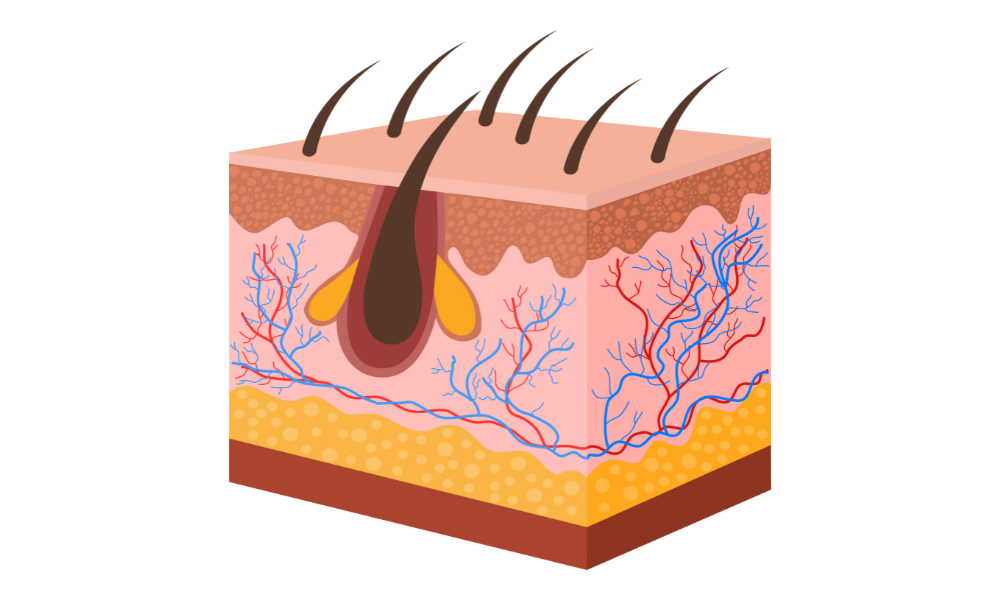
- Human Skin Equivalents (HSE): 3D, lab-grown human skin models that mimic disease-relevant biology and inflammation
- Ex Vivo Human Tissue Models: Direct testing on fresh human samples to observe real-world pharmacologic and cellular responses
- Support for Novel Modalities: Monospecific and bispecific antibodies, novel immune targets, and complex inflammatory pathways
Advanced Modeling and Target Validation
- Human Skin Equivalents (HSE): 3D, lab-grown human skin models that mimic disease-relevant biology and inflammation
- Ex Vivo Human Tissue Models: Direct testing on fresh human samples to observe real-world pharmacologic and cellular responses
- Support for Novel Modalities: Monospecific and bispecific antibodies, novel immune targets, and complex inflammatory pathways
iFyber Supports Programs Across:
- Atopic dermatitis and inflammatory skin disease
- Psoriasis and complex immune-mediated inflammation
- Hidradenitis suppurativa
- Autoimmune and blistering diseases
- Dermato-oncology and immune checkpoint biology
Data that supports confident progression, not just check-the-box testing.
iFyber supports the “heavy lifting” required for early regulatory milestones:
- PK/PD & Biodistribution: Understand exposure, penetration, and tissue-level behavior
- Off-Target Specificity: Membrane proteome arrays to assess binding across thousands of human proteins
- GLP Toxicology & IND-Enabling Studies: Designed to align with regulatory expectations and clinical planning
Whether your program is discovery-stage or advancing toward Phase 2, our models help answer a critical question: How will this antibody behave in real human tissue?
iFyber Supports Programs Across:
- Atopic dermatitis and inflammatory skin disease
- Psoriasis and complex immune-mediated inflammation
- Hidradenitis suppurativa
- Autoimmune and blistering diseases
- Dermato-oncology and immune checkpoint biology
Data that supports confident progression, not just check-the-box testing.
iFyber supports the “heavy lifting” required for early regulatory milestones:
- PK/PD & Biodistribution: Understand exposure, penetration, and tissue-level behavior
- Off-Target Specificity: Membrane proteome arrays to assess binding across thousands of human proteins
- GLP Toxicology & IND-Enabling Studies: Designed to align with regulatory expectations and clinical planning
Whether your program is discovery-stage or advancing toward Phase 2, our models help answer a critical question: How will this antibody behave in real human tissue?
Gain Deeper Insight
iFyber’s modular pitch deck, Antibody Stability in Atopic Dermatitis: De-risking SC Biologics with Protease-Aware Models, outlines how monoclonal antibodies behave in real human tissue environments and how our models help teams identify stability, specificity, and exposure risks earlier in development.
Explore:
- Human-relevant modeling vs. traditional preclinical approaches
- Example data across inflammatory skin conditions
- How teams use these insights to inform IND and early clinical decisions
Download the deck below.
Gain Deeper Insight
iFyber’s modular pitch deck, Antibody Stability in Atopic Dermatitis: De-risking SC Biologics with Protease-Aware Models, outlines how monoclonal antibodies behave in real human tissue environments and how our models help teams identify stability, specificity, and exposure risks earlier in development.
Explore:
- Human-relevant modeling vs. traditional preclinical approaches
- Example data across inflammatory skin conditions
- How teams use these insights to inform IND and early clinical decisions
Why Teams Work with iFyber for Monoclonal Antibody Research
- Human-relevant, disease-aware models—not generic CRO assays
- Early insight that reduces downstream surprises
- Cost-efficient access to advanced infrastructure and expertise
- Data that strengthens clinical, partnering, and lifecycle decisions