
Resources
Why E&L Testing Timelines Are Expanding and How Medical Device Teams Can Stay on Track
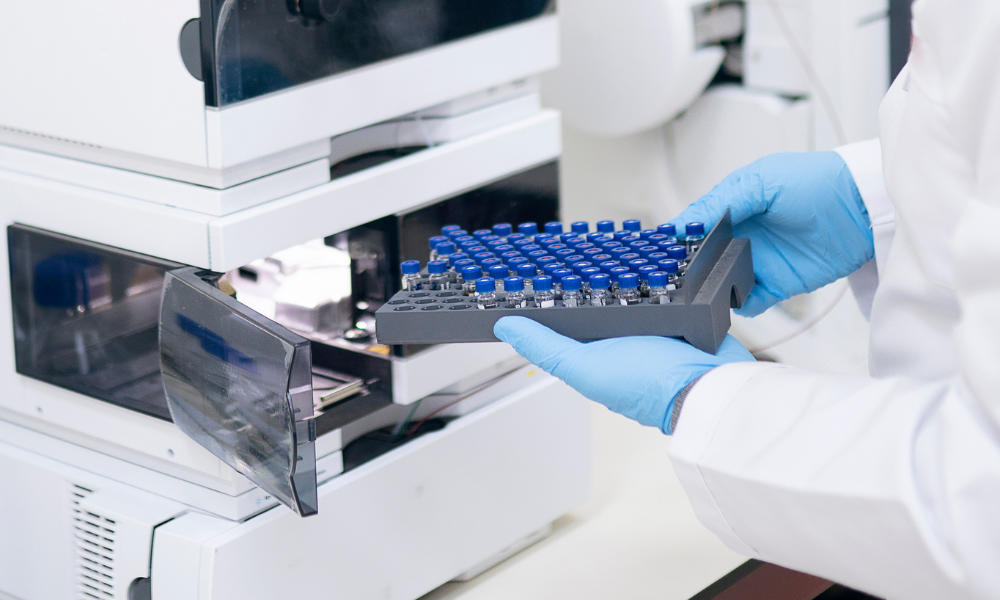
E&L testing, more formally known as extractables and leachables testing, has become a defining constraint in modern device development timelines. A device may be fully designed, materials selected, and verification underway; and yet encounter significant delays once extractables and leachables testing begins.
For medical device developers, that shift is not theoretical. The U.S. Food and Drug Administration’s 2024 draft guidance on chemical analysis for biocompatibility is reshaping how E&L Testing is approached, not just in regulatory strategy, but in day-to-day execution.
The result is a fundamental change in how timelines must be managed. The question is no longer simply whether E&L testing will be required, but whether it has been properly defined early enough to avoid downstream disruption.
Why Extractables and Leachables Testing Is Becoming More Demanding
The draft guidance reinforces a broader industry shift for FDA: chemical characterization is now central to biocompatibility. This aligns with ISO 10993-18 and introduces greater specificity in how extractables and leachables testing must be designed and justified.
For medical device developers, this includes increased expectations for:
- Justification of extraction conditions based on device use
- Comprehensive compound identification and quantitation
- Scientifically grounded analytical method selection
- Clear, defensible reporting
In practice, extractables and leachables testing is no longer limited to identifying what is present. It must explain why it was evaluated, how it was measured, and what it means in a biological context.
Why E&L Testing Timelines Are Expanding
The impact of these expectations is felt in the product development schedule. Across the industry, extractables and leachables testing timelines are expanding due to three converging factors.
More Complex Study Design
E&L testing now routinely requires:
- Multiple extraction conditions across solvent types
- Extended study durations, including multi-phase or exhaustive extraction approaches
- Iterative refinement based on analytical findings
As a result, extractables and leachables testing is no longer linear. It often evolves as new compounds are identified and require further investigation.
Multi-Technique Analytical Requirements
To meet regulatory expectations, medical device developers increasingly rely on orthogonal mass spectrometry techniques such as LC-MS, GC-MS, and ICP-MS.
Each method introduces additional data, interpretation, and potential follow-up work, extending both execution time and decision-making cycles.
Lab Capacity Constraints
At the same time, demand for E&L Testing has increased significantly. Many laboratories are operating at capacity, leading to:
- Extended scheduling lead times
- Limited flexibility once studies begin
- Delays when additional testing is required
Together, these factors are extending E&L Testing timelines and placing pressure on downstream activities.
The Downstream Impact on Medical Device Teams
As extractables and leachables testing timelines expand, the consequences extend across development programs.
Medical device developers are experiencing:
- Delays in verification and validation timelines
- Increased dependence on lab availability and queue times
- Limited ability to adjust study design without downstream impact
- Greater risk of late-stage issues if expectations are not aligned early
This is particularly acute for implantable and long-duration devices, as well as products involving complex polymers, biologics, or combination systems.
E&L Testing Delays Are a Strategy Problem
While lab constraints are real, they are not the root cause of most delays. The underlying issue is when extractables and leachables testing strategy is defined.
Medical device developers that approach E&L testing late in development are now encountering:
- Rework due to misaligned extraction strategies
- Unexpected compounds requiring additional analysis
- Iteration under regulatory constraints
- Increased timeline risk
In contrast, teams that stay on track are shifting earlier. Defining analytical strategy upfront, aligning with regulatory expectations, and proactively characterizing potential extractables before formal testing begins.
Early Extractables and Leachables Testing Changes the Outcome
A growing number of medical device developers are adopting early-stage approaches to extractables and leachables testing, not to replace GLP studies, but to prepare for them. The objective is simple: know what to expect before committing to a full, resource-intensive E&L testing program.
Early characterization enables teams to:
- Understand potential extractables profiles before formal testing
- Evaluate and refine extraction strategies
- Select appropriate analytical methods
- Identify and resolve unknowns early
In practice, this reduces iteration, shortens timelines, and minimizes the risk of costly surprises during regulated studies.
Defining the E&L Profile Before GLP Studies Begin
Without early insight, E&L testing often becomes exploratory under constraint. Each unidentified compound introduces additional analysis, and each adjustment to extraction or analytical methods adds time within an already inflexible phase of development.
In contrast, incorporating early extractables and leachables testing allows teams to make changes to the design, if necessary, and to enter GLP studies with greater clarity. Extraction conditions are better defined, analytical approaches are more aligned with regulatory expectations, and preliminary compound identification reduces the likelihood of unexpected findings.
This level of preparation shifts E&L testing from a reactive process to a more predictable and controlled phase of development. Where the objective is not discovery under pressure, but confirmation against expectations.
Shifting E&L Testing Earlier in Development
Across the industry, there is a growing shift toward earlier analytical characterization to support extractables and leachables testing strategies. This reflects a broader recognition that many of the delays associated with E&L testing originate upstream, when there is still time to make a design change before formal GLP testing begins.
Early-stage analytical work, particularly using techniques such as LC-MS, enables teams to identify and quantify potential extractables, evaluate multiple extraction approaches, and resolve unknowns before entering regulated studies. Rather than iterating once they are in the constraints of GLP testing, teams can refine their strategy in a faster, more flexible environment.
In this model, upfront characterization plays a distinct role. It is not intended to replace GLP extractables and leachables testing, but to inform it. Providing a clearer understanding of what compounds may be present, how they behave, and how they should be measured.
iFyber operates within this earlier phase, focusing on analytical characterization to define the E&L profile before full-scale GLP testing. Helping teams understand what to expect before committing to a costly and time-intensive study.
From Constraint to Control in E&L Testing
E&L testing is evolving alongside broader changes in regulatory expectations and analytical capabilities. Increased rigor and standardization are improving consistency across the industry, but they are also introducing additional complexity in the short term.
For medical device developers, this creates a clear inflection point. When extractables and leachables testing is treated as a late-stage requirement, it is more likely to introduce delays, iteration, and uncertainty. When it is defined earlier, through thoughtful analytical strategy and characterization, it becomes a more manageable and predictable component of development.
Approaching E&L testing in this way allows teams to move into GLP studies with a defined path forward, knowing what to expect, how it will be measured, and where potential risks may arise, rather than discovering those variables in real time.