
Resources
Why Integrated Biomarker Analysis Is Essential for Modern Wound Healing Studies
The Mechanistic Gap in Wound Healing Studies
Clinical wound healing studies have traditionally relied on endpoints such as wound closure, healing rate, and time-to-heal to evaluate therapeutic performance. While these measures remain clinically meaningful, they provide limited insight into the biological mechanisms influencing tissue repair, treatment response, and patient variability.
For sponsors developing advanced wound care therapies, this creates a significant translational challenge. Two therapies may achieve similar clinical outcomes while producing very different effects on inflammation, immune signaling, extracellular matrix remodeling, vascularization, or microbial burden. Without mechanistic data, it becomes more difficult to differentiate products, interpret inconsistent outcomes, or fully characterize therapeutic activity.
As wound care development becomes increasingly mechanism-focused, sponsors are under growing pressure to generate datasets that extend beyond observational efficacy alone. As outlined in iFyber’s white paper on integrated biomarker analysis and microbiome profiling, combining histology, molecular profiling, and microbiological analysis can provide a more comprehensive framework for understanding treatment performance and healing biology.
Why Traditional Clinical Endpoints Fall Short
Clinical endpoints remain essential for evaluating efficacy, but outcome-based measurements alone often fail to explain how a therapy influences the biological processes responsible for repair.
This limitation becomes especially important in chronic and complex wounds, where healing progression is shaped by interconnected host and microbial dynamics.
For sponsors and clinical development teams, relying exclusively on closure-based endpoints can create several challenges:
- Limited mechanism-of-action differentiation
- Reduced visibility into responder versus non-responder biology
- Difficulty interpreting patient variability
- Greater translational uncertainty during development
- Weaker support for biomarker-driven regulatory claims
The challenge is no longer simply whether a wound closes, but how a therapy influences the underlying biology associated with durable tissue regeneration and healing progression.
Integrated Analysis Enables Deeper Biological Insight
Integrated biomarker analysis strategies provide a more complete framework for evaluating wound healing by correlating tissue-level changes, molecular biomarkers, and microbial dynamics over time.
Rather than evaluating clinical outcomes in isolation, multimodal analysis enables sponsors to connect healing progression with the biological pathways driving therapeutic response. This integrated approach is becoming increasingly important in biomarker-driven wound healing studies, where understanding biological activity beyond surface-level healing outcomes can strengthen translational interpretation and therapeutic differentiation.
Histology Provides Translational Context
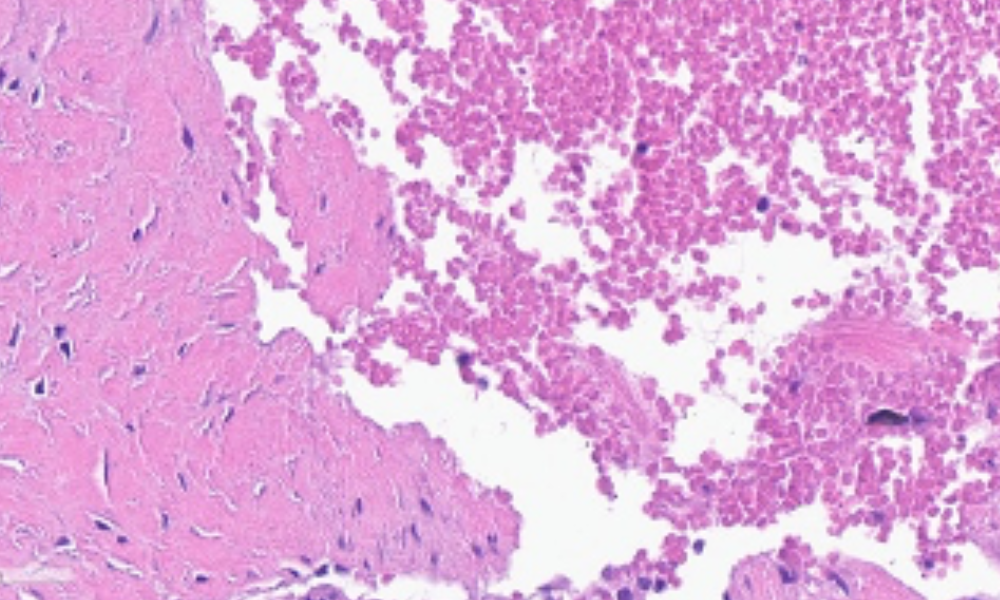
Histological analysis remains critical for evaluating tissue organization, extracellular matrix remodeling, vascularization, and immune cell activity during wound repair. On its own, histology provides important structural context. However, its value increases significantly when integrated with molecular and microbiological datasets.
When analyzed longitudinally alongside transcriptomic and microbiome data, histological findings can help distinguish transient tissue response from coordinated regenerative activity, supporting more robust interpretation of therapeutic performance and biomarker analysis in clinical trials.
Molecular Biomarkers Clarify Treatment Response
Transcriptomic and proteomic analyses enable quantitative evaluation of the biological pathways associated with inflammation, angiogenesis, immune regulation, and tissue remodeling.
In the clinical study highlighted within iFyber’s white paper, molecular profiling identified biomarker activity associated with angiogenesis, extracellular matrix remodeling, proliferation, and restoration of immune balance following treatment.
For sponsors conducting biomarker analysis in clinical trials, these datasets provide an opportunity to move beyond observational efficacy and quantitatively characterize biological response across treatment cohorts. Molecular profiling can also support earlier identification of treatment-associated signals and improved interpretation of variable patient outcomes.
Microbiome Dynamics Influence Healing Progression
The wound microbiome plays a central role in modulating inflammation, infection risk, and tissue repair across chronic wound environments. However, conventional microbiology approaches often provide limited insight into microbial community structure and function.
Integrated molecular microbiology approaches enable more comprehensive characterization of microbial burden, diversity, virulence-associated signatures, and resistance markers. When combined with host-response biomarker analysis, these datasets can help correlate microbial dynamics with therapeutic response and healing progression over time.
This integrated perspective is becoming increasingly important as sponsors seek deeper insight into how microbial environments influence treatment performance.
Why Mechanistic Insight Matters for Sponsors
As wound care development becomes increasingly competitive and mechanism-driven, sponsors are under growing pressure to generate evidence that supports not only efficacy, but differentiation in a crowded marketplace.
Integrated biomarker analysis and microbiome profiling can support:
- Stronger product differentiation through mechanism-based evidence
- Earlier translational decision-making during development
- Biomarker-supported regulatory positioning
- Improved interpretation of patient variability
- More informed study optimization strategies
For emerging therapies, early mechanistic signals may help identify treatment activity before statistically significant clinical separation fully emerges, supporting faster and more informed development decisions.
Moving Beyond Surface-Level Healing Outcomes
A clinical case study highlighted within iFyber’s integrated biomarker analysis framework illustrates the value of this multimodal analysis approach. In the randomized study, diabetic foot ulcer patients treated with Treatment A demonstrated improved healing outcomes and faster wound closure compared with Treatment B.
The broader value emerged through integrated biological analysis:
- Histological evaluation demonstrated increased granulation tissue formation, collagen deposition, and vascularization
- Molecular profiling identified biomarker activity associated with angiogenesis, tissue remodeling, and immune regulation
- Microbiological analysis revealed significant reductions in bacterial burden over time
Together, these datasets showed that treatment performance extended beyond visible closure outcomes alone, revealing coordinated effects on tissue regeneration, immune modulation, and microbial control.
For sponsors, this type of multidimensional analysis supports stronger translational interpretation, more robust therapeutic differentiation, and improved clinical development decision-making.
Advancing Wound Healing Studies Through Integrated Analysis
As wound care development becomes increasingly mechanism-focused, sponsors need datasets that explain not only whether a therapy works, but how it influences the biological processes underlying tissue repair.
Integrated biomarker analysis provides the mechanistic resolution needed to strengthen translational interpretation, support therapeutic differentiation, and improve clinical development decision-making.
By combining histology, molecular profiling, microbiological analysis, and multimodal analysis into a unified analytical framework, iFyber supports sponsors seeking advanced wound healing biomarker testing services and deeper biological insight across wound healing studies.